
Health & Ageing / Skin
Why showers aren't enough after 70
If you shower every morning and you're past seventy, there is something nobody thought to mention. I found out the awkward way, in my own spare room.

My mother moved in with us last spring. She is seventy-eight, she does the crossword in pen, and she has showered every single morning of her adult life.
Within about a week, the spare room started to smell. Not badly. Just… old. Musty, slightly sweetish, the sort of smell you notice on the way past and then forget about.
Which made no sense, because that room had been fine for ten years, and because my mother is the most fastidious person I have ever met.
And here is the part I am not proud of: I recognised the smell immediately.
I had been misreading it for fifteen years
I have been in hundreds of older people's homes. Every care worker knows this smell. And every one of us, quietly and without ever saying it aloud, had the same theory about it.
We thought it was a hygiene smell. The smell of someone who had stopped being able to keep up — with the laundry, the bathing, the changing of the sheets.
So it could not possibly be my mother, who keeps up with everything, and who was showering daily in my own bathroom with my own soap.
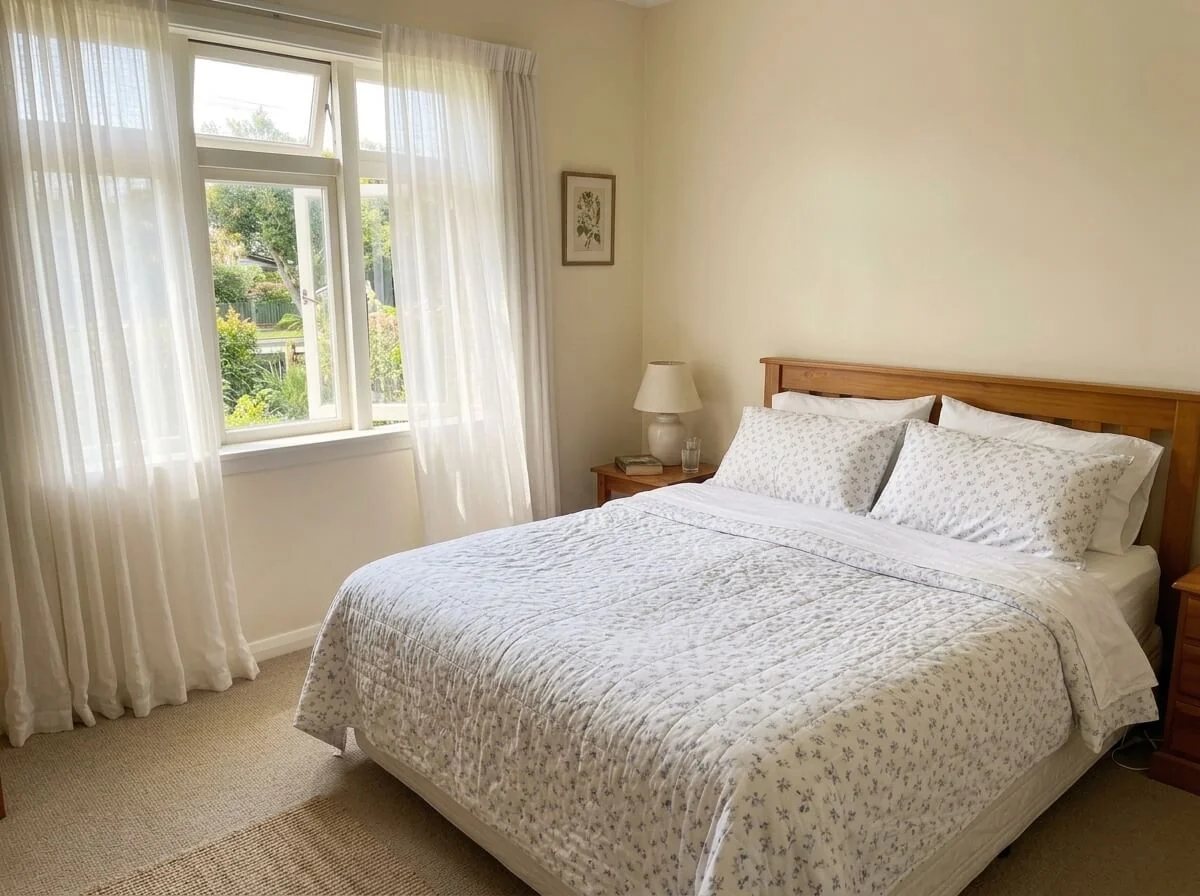
I did what anyone would do. I washed everything. Bedding, curtains, the throw on the chair. I opened windows. I bought a plug-in. I hoovered the mattress.
It came back within two days. Every time.
What the smell actually is
It has a name, and once I knew it, fifteen years of assumptions fell over.
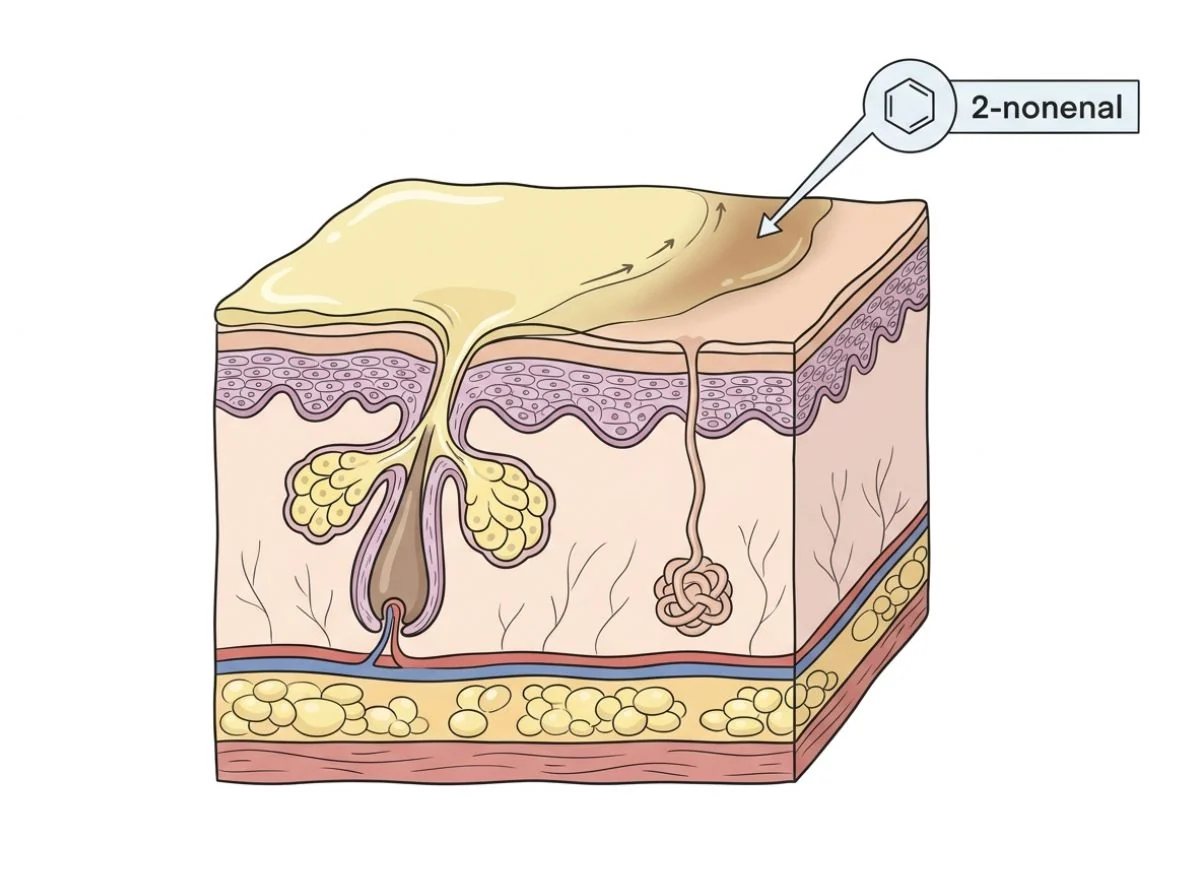
The compound is called 2-nonenal. It forms when certain fatty acids on the skin oxidise — a process that increases with age as skin chemistry shifts. It was first characterised by Japanese researchers studying age-related changes in body odour, and it is well documented enough that there is a Japanese word for the smell.
Two things about it explain everything I had got wrong.
First, it is not produced by sweat or by bacteria, which is what nearly every soap, deodorant and body wash on the shelf is formulated to address. So washing more often, or more vigorously, does not touch it.
Second — and this is the part that had me sitting down — it is not water-soluble. A shower does not remove it. It transfers onto fabric and stays there.
It was never a hygiene problem. It was a chemistry problem that looked exactly like a hygiene problem.
Which is why it lives in the clothes
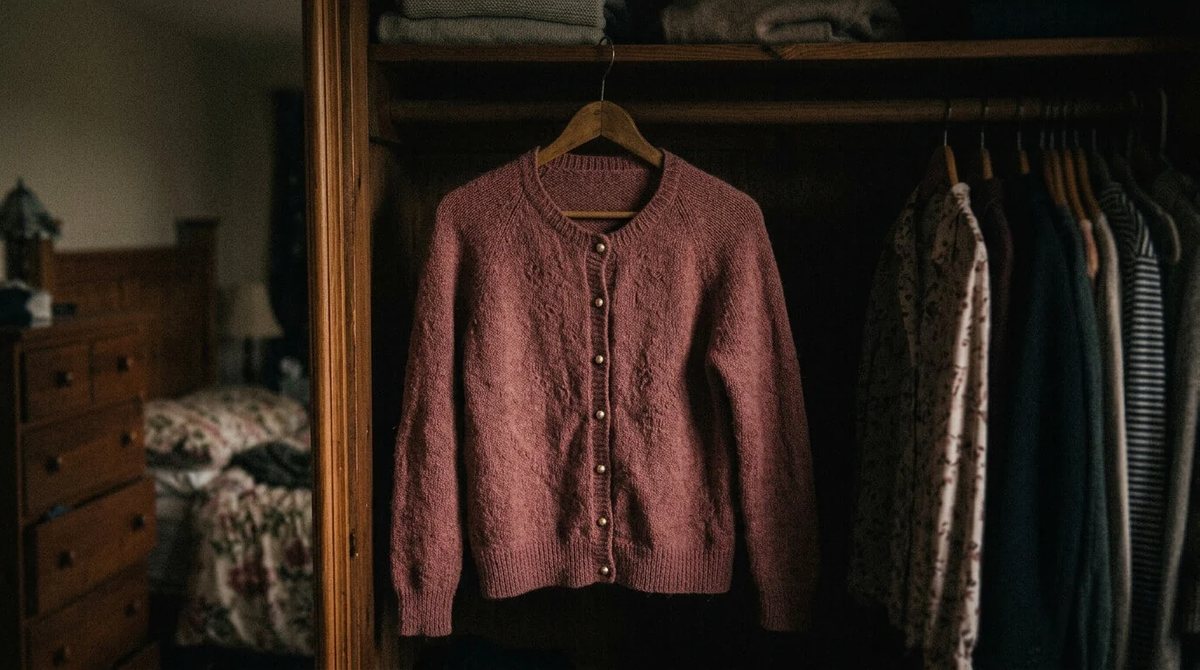
Collars, cardigans, the backs of armchairs, pillowcases. Anything worn repeatedly and washed at forty degrees.
The room was not the source. The room was the record.
The persimmon thing
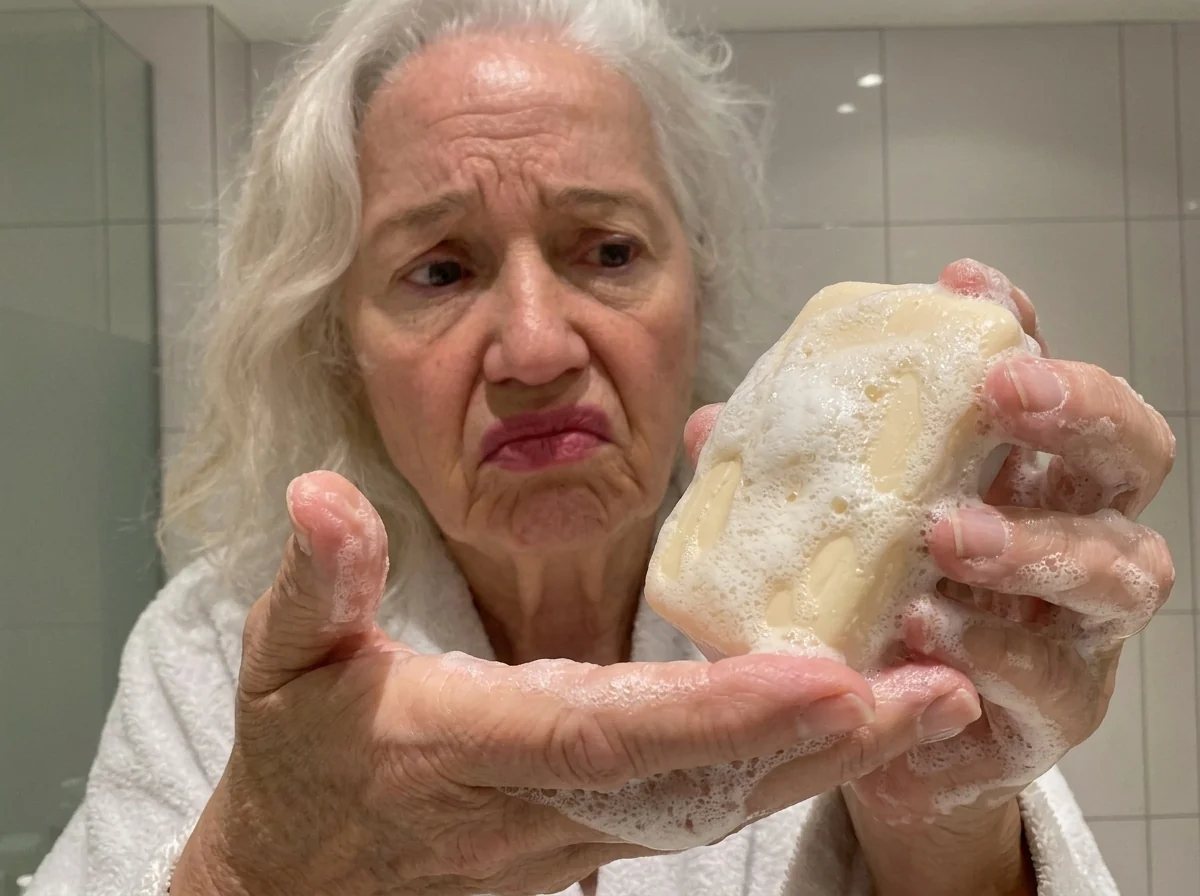
Persimmon tannin — kakishibu — has been used in Japan for centuries, originally for waterproofing and preserving, and for a very long time in soap.
The relevant property is that tannins bind to the aldehyde compounds rather than trying to rinse them away. That is a different mechanism from ordinary soap, and it happens to be the mechanism this particular problem needs.
I want to be careful here. This is not a medicine, it does not treat any condition, and I am a care worker rather than a chemist. What I can tell you is what happened in my house.
I didn't explain. I just put it in the bathroom.
I was not going to have that conversation with my mother, and I would not have known how to start it.
So I put a bar in the shower and said it was a gift from a friend who makes soap. She used it because it was there.
The room took about ten days. Her cardigans took a full wash cycle after that. By the third week I had stopped opening the window out of habit, which is how I realised I had stopped noticing anything at all.
What I spent, versus what fixed it
| Plug-in diffusers and refills | $64 |
|---|---|
| Fabric refresher sprays | $38 |
| Mattress protector | $55 |
| Professional carpet clean | $180 |
| Two loads of curtains, dry cleaned | $72 |
| Spent on the wrong problem | $409 |
| What actually worked | One bar of soap |
The questions I always get asked
Does it only matter after seventy?
No. The compound starts appearing in measurable amounts around forty and increases from there. Seventy is just when it usually becomes noticeable to other people.
Can't you just wash the clothes more often?
It helps, but a standard warm wash does not fully remove it, which is why the same cardigan smells again by the afternoon. Dealing with it on the skin is the part that actually breaks the cycle.
Will it dry the skin out?
My mother has thin, easily irritated skin and had no trouble with it. That is one person, not a study — if skin is a concern, patch test first and talk to a pharmacist.
How do I give it to someone without hurting their feelings?
Honestly? Don't explain. Put it in the bathroom. This is the question I get most, and it is the one I have the least clever answer to.
The bar I ended up buying
Persimmon tannin soap
Kakishibu extract · green tea · plant-based base
See the persimmon soap I found60 days. Use it, then check the fabric — that is the honest test.
What other people said
“I bought it for my father and did not tell him why. Three weeks later my sister asked what he had changed. That is all I needed.”
“Works. Smells of not very much, which I count as a plus. The bar goes soft if you leave it sitting in water, so get a draining dish.”
“Some improvement but not the transformation I was expecting from the article. Still using it. Would have liked it to be cheaper.”